Watch points
Tiumpan Head: deep water under a lighthouse
Water that drops away sharply a few hundred metres from your feet, a Risso’s dolphin protected area offshore, and a car park that fills by ten.
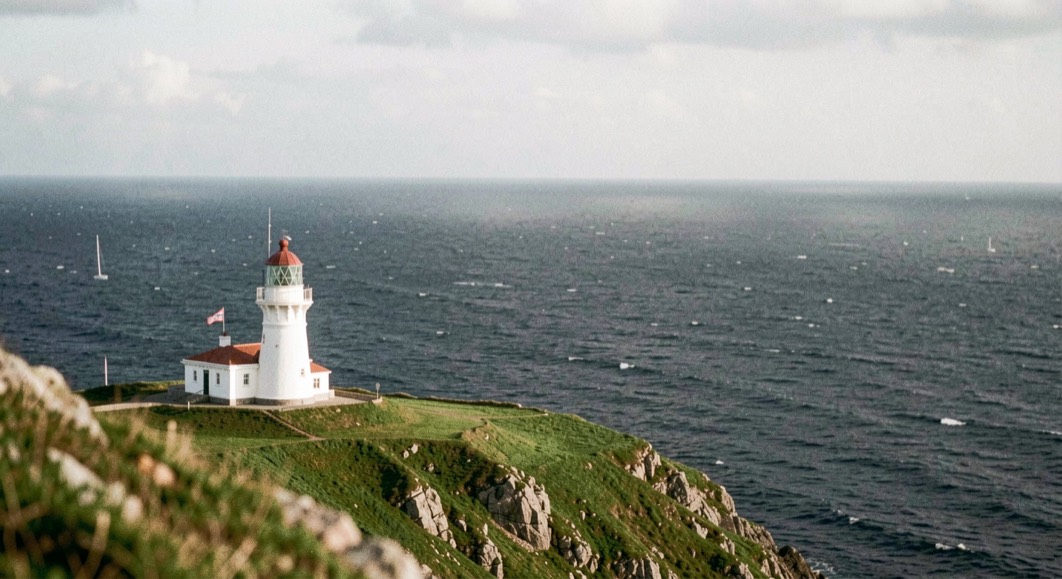
If there is one place on this coast that justifies a journey made for the sea alone, this is it. The Hebridean Whale Trail states the case without hedging: Tiumpan Head is widely considered one of the best places in the UK for whale watching from land, and possibly in Europe. That is the Trail’s judgement, published by the Hebridean Whale and Dolphin Trust, and it is worth taking seriously because the Trail is not short of alternatives.
Why does the water matter more than the view?
Because it is deep, close in. The Trail describes the water just below the lighthouse as dropping off sharply into depths where some of the more elusive whales and dolphins might appear. That single feature is what separates a good watching headland from a pretty one. Deep water near shore brings the squid eating species, principally Risso’s dolphin, into binocular range without a boat.
The headland sits at the tip of the Eye Peninsula on the east side of Lewis, known locally as Point, and the Trail gives the Gaelic as Rubha an Tiumpain, with a possible Norse origin meaning point of sight. The outlook runs east across the Minch to the mainland mountains and north across open sea.
The longest species list in this register
The Trail’s species list for Tiumpan Head is the longest of any site in this register: Risso’s dolphins, bottlenose dolphins, minke whales, humpback whales, common dolphins, harbour porpoises and killer whales, with seals, gannets, fulmars and terns alongside. Its own summary is that just about any of the more common species of whale, dolphin or porpoise could be seen here.
Two published reasons to choose this headland
Risso’s dolphin. The Trail describes Tiumpan Head as sitting at the heart of an important area for the species. In December 2020 the Scottish Government designated the North East Lewis Marine Protected Area, running from the Butt of Lewis south to Lochs, with Risso’s dolphins among its protected features.
Minke whale. Whale and Dolphin Conservation’s Shorewatch analysis of 1 February 2026 reports a clear June to July peak in minke sightings and names Tiumpan Head as a site where that peak stands out.
The ground, and its real limits
Parking is at the bottom of the hill, followed by a short walk up a tarmacked road to the spotting area by the lighthouse. The Trail is explicit that car parking is very limited, that there is no parking in the turning circle in front of the lighthouse, and that a private business operating in the lighthouse premises requires access at all times.
That is not a detail to skim. On a fine day in July the limiting factor at this site is not the whales; it is the space to leave a car without blocking someone’s working access. Arriving early, or arriving by bus to Portvoller and walking about a quarter of a mile up the single track road, removes the problem entirely.
The Trail describes the watching site as outdoors with a fairly good footpath, and rates it accessible on that basis.
How is the site actually worked?
In ten minute watches, from a fixed point, with everything written down. The Trail notes that Whale and Dolphin Conservation Shorewatch volunteers regularly monitor the seas from here, and that they are knowledgeable and worth talking to. Their method is public: a watch is ten minutes long, from a fixed viewpoint, with the conditions noted at the start and everything seen noted as it happens, including nothing. Whale and Dolphin Conservation reports that in 2024 its volunteers logged over a million minutes of observation across roughly 100,000 individual watches, and recorded at least 18 species of whale, dolphin and porpoise in Scottish waters.
A visitor cannot replicate that, but a visitor can copy the shape of it: three or four ten minute watches across two hours, each with a stated sector and conditions, will produce a better record and more sightings than unfocused looking. If you arrive mid watch, the courteous move is to wait rather than to open a conversation.
How to plan a session here
Face east and the light is behind you in the afternoon and in your eyes at dawn. The Sea Watch Foundation records glare on a four point scale from no glare and excellent lighting to strong glare and poor lighting, and on an east facing headland the difference between a nine o’clock watch and a four o’clock watch in June is exactly that spread.
What to bring
The Hebridean Whale Trail’s own checklist: waterproofs and warm layers, because the weather changes fast; appropriate footwear; binoculars or a scope if you have them; a camera, which makes later identification possible; and a flask. It adds that there is still plenty to see without binoculars.
What it does not promise, and where the record goes
Nothing. The Trail says so on every site page, and it bears repeating here because this is the site people travel for: you are by no means guaranteed to see a whale or a dolphin, because they are wild creatures and can be frustratingly elusive. A blank two hours at Tiumpan Head is a normal outcome and, recorded with the conditions, still a useful one.
Useful because it can be sent in. The Trail directs visitors to Whale Track for the latest sightings at each site and for submitting their own. Whale Track is the Hebridean Whale and Dolphin Trust’s public sightings scheme, and it exists precisely so that an observation from a headland becomes part of the record rather than a story told in a car park.
Sources
The facts on this page were read back against the pages below on 5 September 2026.
- Hebridean Whale Trail, Tiumpan Head, Isle of Lewis, whaletrail.org, consulted 5 September 2026.
- Hebridean Whale and Dolphin Trust news, Protected areas designated, 3 December 2020.
- Whale and Dolphin Conservation, Shorewatch analysis, 1 February 2026.
- Sea Watch Foundation, land based recording form definitions, SWF/RF0.