The journal
About North Minch Shore Watch
A journal kept from land, by watchers, about what passes the coast: which species, in which months, and what the sea state allows.
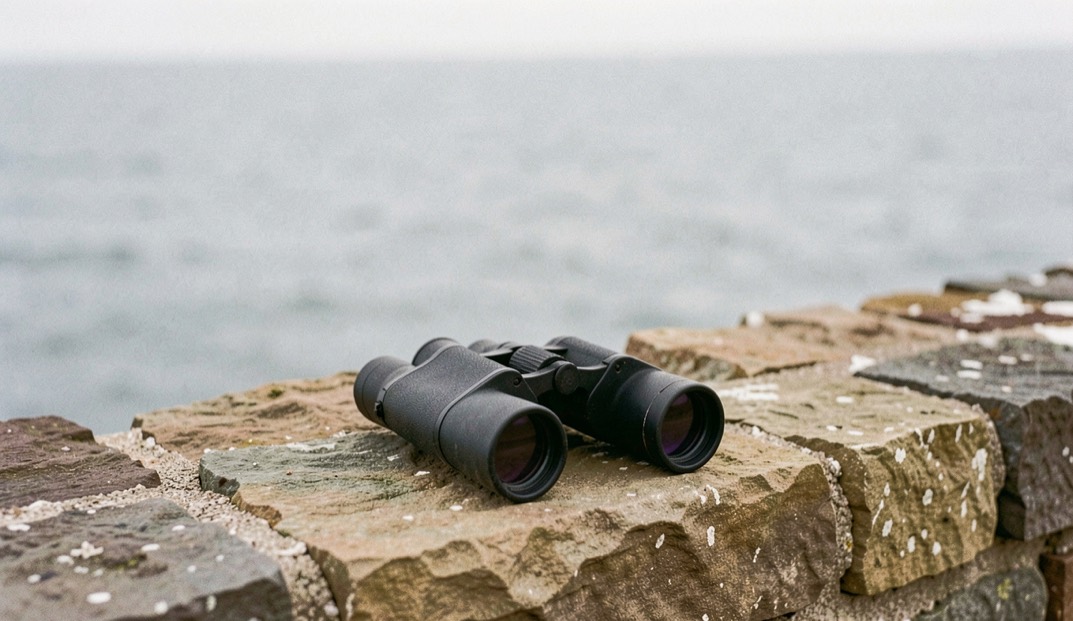
North Minch Shore Watch is a written journal about the whales, dolphins and porpoises of the north Minch and the north west coast of Scotland, and about the business of seeing them from a headland rather than from a deck. It is organised in three registers: the species, the shore watch points, and the seasons and sea state that decide what a watcher actually sees.
What it is, and what it is not
It is a reference kept from land. Every entry is built from the published record of the organisations that study these animals: the Hebridean Whale and Dolphin Trust, Whale and Dolphin Conservation, the Sea Watch Foundation, the Hebridean Whale Trail, and the Scottish Government and the Joint Nature Conservation Committee for protected areas. Each page names the source it leans on and the date it was consulted.
It is a reading site rather than a booking one: it carries no fares, no departure times and no list of operators. It quotes the organisations named above; it does not speak for them, and none of them has any hand in what is published here.
Who keeps it
The journal is kept by a small desk that signs collectively as the Shore Watch desk. It does not publish individual names, and it does not claim personal sightings, decades of experience or a base on the coast. What it claims is narrower and checkable: that the facts on each page come from the sources named on that page, and that a mistake pointed out to the desk is corrected in the open. How that happens is set out in %%.
The illustrations
Every picture on this site is an illustration made for the journal by an image generator, from a written description of a scene. None is a photograph of a real animal, a real sighting or the real site, and each one carries a line under it saying so. They exist to give the reader a sense of what a back, a fin or a headland looks like at a distance, not to prove that anything was seen. Identification always rests on the text and on the sources, never on the picture.
The address that holds the line
This domain once belonged to a boat based whale watching business. That business is gone, its pages have not been moved anywhere, and this journal does not continue it, trade on its name or take its bookings. The subject stays, because the animals and the coast are the same; the commerce does not. A reader who arrived looking for a trip will find, instead, a page on %% and an honest account of the odds.
Writing to the desk
One address reaches the desk, and it is read by the people who write the entries. Corrections, questions about a watch point, and notes about what was seen from a given headland are all welcome; the practical details are on the page for %%. A note that reports a sighting is answered, but the desk will also point the reader to the organisations whose recording forms turn a sighting into data.